Are you looking for an estate planning lawyer in Culver City, CA?
At The Werner Law Firm, PC, we serve clients in Culver City estate planning matters with five decades of combined legal experience.
If the time has come to organize your affairs and protect your family, a thoughtful estate plan is where that work begins. Our Culver City, CA estate planning lawyer can prepare the documents that carry out your wishes, from wills and trusts to health care directives. The Werner Law Firm, PC has served California families since 1975, and our founder brings fifty years of practice to this work. Your first consultation is free, and it comes with no obligation.
Estate planning is how you decide, in advance, what happens to your property and who makes decisions for you if you cannot. A plan generally brings together several documents, each handling a different part of that picture. The result is a set of clear instructions your family can follow without guesswork during a hard time.
People sometimes assume estate planning is only for large estates. In practice, almost anyone with property, children, or firm preferences about their own care benefits from a plan. Without one, California law fills the gaps with default rules that may not reflect your wishes. An estate planning attorney in Culver City helps you make these decisions deliberately, rather than leaving them to a formula. Good planning now can save your family months of court proceedings, unnecessary cost, and the strain of making decisions with no direction to follow.
Estate planning rarely comes down to a single document. Most plans combine several, and the right combination depends on your family, your property, and your wishes. Our Culver City estate planning attorneys help you decide which documents you actually need. These are the estate planning services our Culver City attorneys handle most often.
Wills. A simple will names your beneficiaries, an executor, and a guardian for minor children, and it anchors most plans.
Living trusts. A living trust passes your assets to your beneficiaries without probate and keeps your affairs private.
Special needs trusts. A special needs trust provides for a loved one with a disability without putting their public benefits at risk.
Powers of attorney. A power of attorney lets someone you trust manage your finances if you become unable to.
Advance health care directives. An advance health care directive records your medical wishes and names an agent to speak for you.
Probate. When an estate must pass through probate, we guide the personal representative through the court process and the filings it requires. Probate is public and can run for months, which careful planning often avoids.
Trust administration. After a death, we help trustees through the trust administration process and the duties that come with it.
An estate plan touches your family for years after it is signed. We prepare each one with the care that kind of responsibility calls for. Small choices in these documents can carry large consequences later, so the details matter.
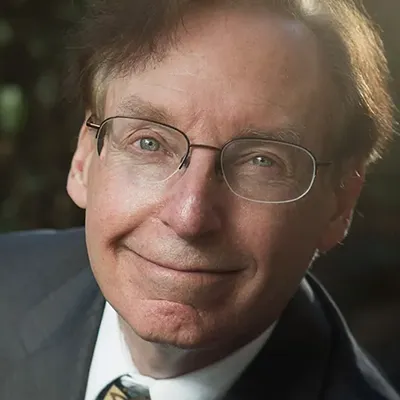
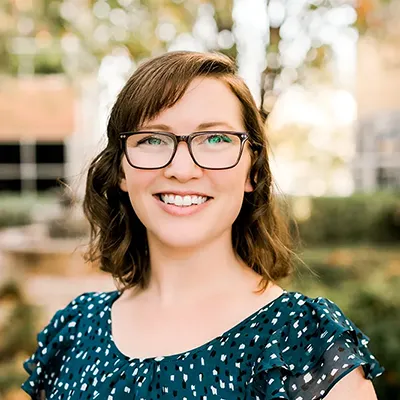
The Werner Law Firm, PC has guided California families through wills, trusts, and probate since 1975. Our founder, L. Rob Werner, has practiced for fifty years, earned recognition from the Los Angeles Daily News as a top local attorney, and belongs to the Los Angeles County Bar Association. Our managing attorney, Troy Werner, brings 17 years of practice and is admitted in both California and Texas. As an estate planning lawyer in Culver City, CA, our firm has handled plans of every size, from a single will to layered trusts, and brings that range to each new matter. We take the time to explain each document, so you know what you are signing and why it is there.
Much of our work comes from clients we have helped before and the people they refer to us. Every plan begins with a free consultation and a plain explanation of what it will involve. Whatever the size of your estate, our Culver City estate planning lawyers aim to leave you with a plan you understand and can trust.
An estate plan is a set of instructions and legal authorities that work together as a whole. Some documents take effect while you are alive, and others only after you pass. Knowing what each one does makes it easier to decide what your own plan should include. A plan does not need to be complicated to be effective, and for many households a will, a trust, and a few health and financial documents cover the essentials.
A California estate plan is usually assembled from a few core documents, each with a clear role.
Will. Says who inherits your property and names a guardian for minor children.
Living trust. Holds your assets so they reach your beneficiaries without probate.
Durable power of attorney. Authorizes someone to manage your finances if you are unable.
Advance health care directive. Sets out your medical wishes and names an agent to speak for you. It can be filed with the state's advance directive registry for easy access in an emergency.
Beneficiary designations. Send accounts such as retirement funds and life insurance straight to the people you name.
Which of these estate planning documents you need depends on your assets and your family. Many plans center on a living trust, though a will-based plan suits some households better. The right mix is the one that fits your assets, your family, and the level of involvement you want during your lifetime.
No two plans are identical, because no two families are. The plan that fits a young couple with small children looks little like the plan for a retiree or a single business owner. A few points deserve early attention.
How your assets are titled, since joint ownership and beneficiary forms can control regardless of what your will says.
Whom you would trust as executor, trustee, or health care agent.
Any special situations, such as a beneficiary with a disability or a share in a family business.
What should happen if you lose the ability to manage your own affairs.
If you leave no plan, the state provides one by default. Seeing what happens when a person dies without a will makes the value of planning ahead clear.
Most estate plans are finished within a few weeks, and we set the pace to fit your situation.
A first meeting to talk through your family, your property, and your goals.
A look at how your assets are owned and titled.
Drafting of your documents, with time to review them and ask questions.
A signing appointment where everything is properly executed.
Funding any trust by moving your assets into it.
Plans that involve a business, out-of-state property, or a blended family usually take a little longer to complete. We will give you a realistic sense of the timeline once we understand what your plan involves.
A little preparation helps us give you clear direction from the first meeting.
A rough inventory of your assets, including real estate, financial accounts, and any business interests.
Any estate planning documents you have already signed.
The names of the people you might choose as beneficiaries, guardians, or agents.
You don't need to have every detail settled. We can begin with what you bring and fill in the rest together. There is no need to wait until everything is decided before you reach out.
Estate planning is governed by California law, and several public resources can help you understand the basics before or after you meet with an attorney. The following are good places to start.
The California Courts self-help guide on wills and estates walks through planning and probate.
The same guide provides sample legal documents, including a statutory will and power of attorney.
The full California Probate Code is published by the state for those who want the statutes themselves.
These resources offer general information, not advice about your particular estate and family.
A well-built estate plan brings peace of mind and spares your family difficult guesswork later. We would be glad to explain your options and answer your questions at a comfortable pace. Your first consultation is free, with no pressure to decide on the spot. Contact us to get started.

Culver City estates tend to be asset-heavy rather than cash-heavy. A house bought decades ago, a production company, a catalog of work that still pays out, a retirement account nobody has looked at since the beneficiary form was signed. Those are the pieces that decide whether a plan holds together, and they're also the pieces a generic will handles badly.
Real property is usually the anchor. A Culver City home is worth roughly a third more than the typical home in Los Angeles County. Probate is measured against the full value of that property, not the owner's equity in it. That gap catches people. A homeowner who thinks of their estate as modest can leave behind an estate the court treats as substantial. Our Culver City estate planning attorneys start most first meetings with what you own and how each piece is titled, because that's where the surprises live. The second surprise is usually how little of it a basic will can reach.
A Pew Research Center survey of 8,750 U.S. adults found:
32 percent of adults have created a will.
31 percent have a living will or advance health care directive.
Among adults in their 60s, 46 percent have a will. Among those in their 70s, 66 percent do.
Roughly a third or fewer of adults under 60 have created either document.
61 percent of parents 65 and older have talked with their adult children about what to do with their belongings.
How each asset is titled. Title controls more than most people realize. A joint account, a beneficiary form, or a deed held in a particular way can send an asset somewhere your will never contemplated. Reviewing how property is titled is usually the first real work in building a plan. It's also the step that most often changes what the rest of the plan needs to say.
Whether the trust was actually funded. Signing a trust creates the container. Moving assets into it is a separate job, and it's the one most often left half-finished. Funding the trust is what determines whether your family deals with a trustee or a judge. A trust holding nothing does nothing.
What form your business interest takes. A sole proprietorship, an LLC membership interest, and an S-corp share each pass differently. Some operating agreements restrict transfers on death outright. Planning around a family business means reading those documents before drafting anything. Culver City estate planning lawyers who skip that step produce trusts that can't legally hold the thing they were built to hold.
Whether income keeps arriving after death. Royalties, residuals, and licensing payments don't stop when the person does. They need a named recipient. They also need someone holding authority to collect them and account for them. Without that, payments pile up in an account nobody can touch.
Who you name, and whether they can actually serve. A trustee managing a rental property and a production entity needs different skills than one distributing a savings account. Naming a person who can't do the work is a common source of estate disputes later. Willingness matters too. Ask the person before you name them.
Whether the plan accounts for digital property. Accounts, files, domains, and stored work often carry real value and real sentimental weight. Access is governed by terms of service and by whatever authority you granted in advance. Addressing digital assets in writing spares your executor a long fight with a platform. It also spares your family the loss of work that exists nowhere else.
How the documents read when someone finally opens them. A plan gets used once, usually by a grieving person under time pressure. Clarity at that moment is worth more than clever structure. We draft with that reader in mind, which sometimes means a plainer document than the one a client expected.
The number tracks what the plan has to hold. A house and two beneficiaries is one kind of engagement. A house, an LLC, a royalty stream, and a child from a prior marriage is another. We give you a flat figure at the consultation, before any work begins, so you're deciding with a real number rather than an estimate that moves. Complexity is what drives it, not the size of your bank balance.
Whatever your operating agreement and state default rules say, which is rarely what you'd have chosen. Your interest may pass to heirs who can't run it, or to a partner on terms set years ago. Sometimes the business simply stops while the court sorts out authority. Building a succession plan into your estate plan is how you keep that decision yours.
They can, and that's usually the wrong result. A will runs through probate, and probate is both public and slow. Payments continuing during that period need someone with authority to receive them. A trust generally handles ongoing income better, since a successor trustee can act right away without waiting on a court appointment.
Often yes, though it depends on your operating agreement. Some agreements permit transfers to a revocable trust and some require consent from other members. The transfer also has to be documented properly, not just mentioned in the trust schedule. Structures like a family LLC are built with this step in mind from the start.
For most Culver City homeowners, yes. A property at this value carries an estate past the point where any simplified transfer is available. A will alone would send your family to court. A trust moves the house to your beneficiaries without that step. It also gives someone authority to manage the property if illness leaves you unable to. For a single-asset estate, that second benefit is often the one that matters sooner.
That depends on what you authorized while you were alive. Platforms follow their own terms, and an executor without written authority often gets nowhere. Photos, manuscripts, code, and client files can all carry value worth protecting. We address them explicitly rather than hoping a general clause covers it.
We'd rather you didn't. Handwritten edits on a signed document create ambiguity and sometimes invalidate the provision entirely. Amendments have formal requirements. When changes stack up, a restatement of trust is usually cleaner than layering one amendment on another. Call us instead. Most updates are quick.
Culver City has no probate court of its own. Every estate, trust, and conservatorship matter from the city is heard in the Central District, at the Stanley Mosk Courthouse at 111 N. Hill Street downtown.
Los Angeles Superior Court probate court, 111 N. Hill Street, Los Angeles. Probate department: (213) 830-0850. Records: (213) 830-0803.
Filings are made downtown regardless of where in the county the person lived, so a Culver City family should plan for the drive and the calendar.
Planning work often runs alongside property records and family caregiving. Two Culver City offices come up regularly in that work, and our Culver City estate planning attorneys point clients to both.
Culver City Senior Center: 4095 Overland Avenue, runs information and referral services for older residents. Bereavement support groups meet there as well. (310) 253-6700
The Los Angeles County Assessor keeps a West District office at 6167 Bristol Parkway in Culver City. It handles ownership records and change-in-ownership questions after a property transfer. (213) 974-3211
We don't endorse, sponsor, or have any affiliation with the organizations listed above. They appear here as a convenience for Culver City residents, and contact details can change without notice.
L. Rob Werner, belongs to the San Fernando Valley Bar Association and the American Arbitration Association. That arbitration background shows up in how we draft the provisions meant to keep families out of a fight. We also work with clients in English and Spanish. Our Culver City estate planning lawyers serve the Westside from our Southern California offices, and the first conversation costs nothing.
⭐⭐⭐⭐⭐
"Working with this team was amazing. I can't imagine them making it any easier to create a will and trust. Clear explanation of what is required and great advice on items that can be done in a variety of ways. The end result fit our needs perfectly." — Brett Singley
Read more reviews on our Google Business Profile.
Bring what you have, even if it's incomplete. A deed, an operating agreement, an old trust from another office, and a list of accounts. Our Culver City, CA estate planning attorneys will read through it with you. You'll hear what your situation calls for and what it would cost, in plain terms, at no charge for the meeting itself. There is no commitment or obligation to continue. Contact us to set a time that works.

The information on this website is for general information purposes only. Nothing on this site should be taken as legal advice for any individual case or situation. This information is not intended to create, and receipt or viewing does not constitute, an attorney-client relationship! See full disclaimer here.